The short answer
An empty house contains none of the objects included in a particular house-occupancy count. The label depends on the selected objects and house boundaries; it does not mean that the corresponding area of life is absent.
Why are some houses empty?
Choose the familiar ten-body set: Sun, Moon, Mercury, Venus, Mars, Jupiter, Saturn, Uranus, Neptune and Pluto. There are twelve houses. If each of those ten objects is assigned to one house, at least two houses must contain none of them. Sharing houses can leave more empty.
CHANI's house introduction uses this ten-versus-twelve explanation. The count includes the Sun and Moon in the astrological set; it does not include the nodes, asteroids or angles. A different selected set can produce a different number of empty houses.
So ask “empty of what?” before asking what emptiness means. A house containing a node but no planet can be empty under one list and occupied under another. The label is meaningful only with its counting rule attached.
Ten objects, six occupied houses
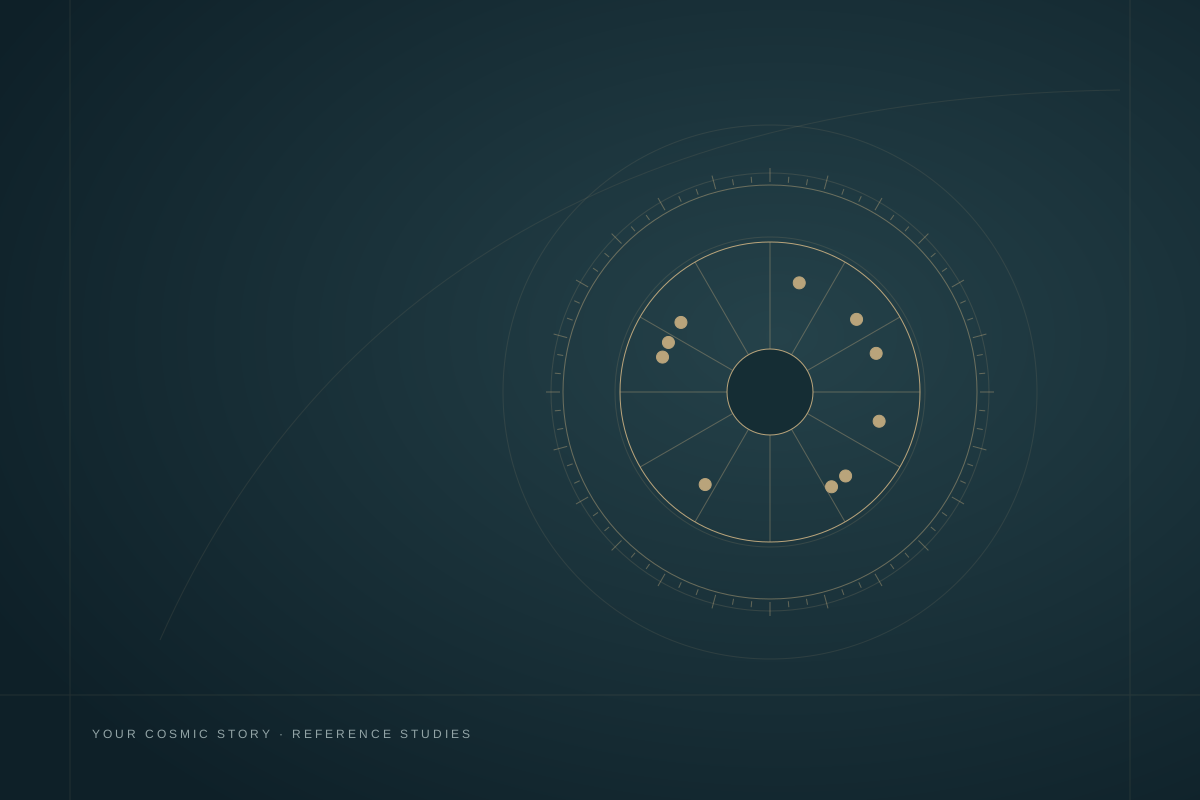
Our invented distribution places two objects in house two, one in house four, one in house eight, two in house ten, three in house eleven and one in house twelve. The total is 2 + 1 + 1 + 2 + 3 + 1 = 10.
Houses one, three, five, six, seven and nine contain none of the selected objects: six empty houses, not just two. The cells below are a counting diagram with equal visual widths. They are not a calculated wheel or evidence that a particular birth moment has this arrangement.
Try moving one counter from a house with several objects into an empty cell. The total remains ten, but the number of occupied houses increases. This simple exercise shows why the same object total can produce different empty-house counts.
How do I read an empty house?
One established approach is to read the house's sign and then follow its ruler. CHANI describes this within its Whole Sign practice. Keep that framework visible when transferring the method to a personal chart.
For a separate invented example, use Libra rising with Whole Sign houses. Aries is house seven. Suppose that house contains none of the ten selected bodies, and Mars is at 8° Virgo. Under the traditional ruler table, Aries is assigned to Mars; Virgo is house twelve in this framework.
The resulting note is “empty seventh house in Aries; its ruler Mars is in Virgo in house twelve.” This is a chain of labels and lookups. The house remains empty of the chosen bodies even though its ruler is present elsewhere. It has not disappeared from the chart.
Read the distinction between sign, house and chart rulers before adding interpretation. In this example Venus remains the chart ruler because Libra rises; Mars is being followed for the seventh-house question.
Does an empty seventh or tenth house rule out relationships or a career?
No. An occupancy count does not establish whether someone can form a relationship or do meaningful work. CHANI explicitly rejects the idea that an empty seventh house prevents fulfilling partnerships.
For an original seventh-house exercise, start with an ordinary question about agreements: what makes an expectation clear enough for both people to discuss? Describe one recent example before consulting the symbolism. The response comes from the people involved, not from a blank sector.
For a tenth-house exercise, ask what contribution you want others to be able to rely on. A house without planets does not provide a measure of ambition, achievement or professional success. If you use its sign and ruler as reflective prompts, keep your actual circumstances and opportunities in the account.
The seventh-house and tenth-house entries give broader context. There is no need to turn every empty-house label into a separate prediction.
Can a house stop being empty when the settings change?
Yes: the count depends on where the boundaries are. The same planetary longitude can fall in different numbered houses under different methods. Our Equal versus Whole Sign example keeps the position fixed while changing the rule for its house.
That is a change in classification, not a planet jumping to a different position. Keep the zodiac, location, time and object list fixed when comparing house methods. Otherwise, more than one change may explain the result.
Unknown birth time presents a more basic problem: the relevant boundaries may not be established. A noon placeholder is not sufficient evidence that a particular house is occupied or empty. Start with the birth-time guide if the chart's input is uncertain.
Natal occupancy and later transits are different layers
A natal occupancy list records the selected reference moment. A later transiting planet can pass through a natal house that contained no natal planet. The later passage does not rewrite the original occupancy count. Label the two moments rather than saying the natal house has permanently filled.
Our transits versus natal chart guide explains that distinction. For a reading note, record five things: the house method, selected objects, empty house number, its sign and ruler, and one question grounded in your actual life.
You can then return to the note without needing to recover which settings created it. If the astrological vocabulary does not clarify the question, leave that conclusion in the record too.
A question to take with you
What real question would you ask about this area of life if you had not first seen the word “empty”?
Sources & further reading
- CHANI · The twelve houses
Ten-body occupancy, the empty-seventh-house misconception and following house rulers in a Whole Sign framework.
- CHANI · Whole Sign houses
The source’s sign-per-house convention. Our positions and exercises are separately invented learning aids.
- CHANI · Working without a birth time
Limits on angles, houses and time-sensitive positions when the birth time is unknown.
- Cafe Astrology · Zodiac sign rulerships
The author’s sign-ruler list and distinction between the Ascendant ruler and another house ruler.
These sources distinguish astronomical definitions from named astrological conventions. The worked positions, counting models and exercises are original teaching material. Interpretations are reflective prompts, not established predictions. Read our approach to astrology.